There's a stage in rural and regional property development that sits between the vision and the reality — between what a landowner wants to do with their property and what the land can actually support safely and sustainably. This stage doesn't always receive the attention it deserves in the excitement of planning a new rural home, subdivision, or development, but it determines more about what's ultimately possible than almost any other single factor in the process.
Land capability assessments sit at the centre of this stage — and for property owners and developers across regional Victoria and New South Wales who need to understand what their land can genuinely support, Septic Land Capability Assessment provides the professional LCA services that turn an often confusing regulatory requirement into a clear, actionable understanding of the site's genuine potential.
A land capability assessment is a systematic, site-specific evaluation of a parcel of land's capacity to support an onsite wastewater management system — typically a septic system or alternative wastewater treatment system for properties not connected to reticulated sewer.
The assessment examines the soil characteristics, topography, drainage patterns, vegetation, and other site factors that collectively determine how effectively the land can receive, treat, and disperse the wastewater generated by the intended use of the property. It's not a generic assessment of whether land is good or bad — it's a specific evaluation of whether this particular site, with its specific soil profile and physical characteristics, can safely manage the wastewater load that the proposed development will generate.
Understanding about land capability assessments matters because the outcome of the assessment directly determines what development is permitted on a rural or regional property. Properties without sewer connection can only support development that their land can safely manage — and the LCA provides the evidence base that planning and health authorities use to evaluate what that development can appropriately be.
For rural residential lots, this typically means establishing that the land can support a primary dwelling and any secondary residence or ancillary structures with approved wastewater systems. For rural subdivisions, it means demonstrating that each proposed lot has sufficient capability to support the intended land use independently — which significantly affects what subdivision layouts are viable.
The requirement for a land capability assessment isn't simply a paperwork exercise — it's a technical investigation that requires specific expertise in soil science, site hydrology, and the regulatory frameworks that govern onsite wastewater management in the relevant jurisdiction.
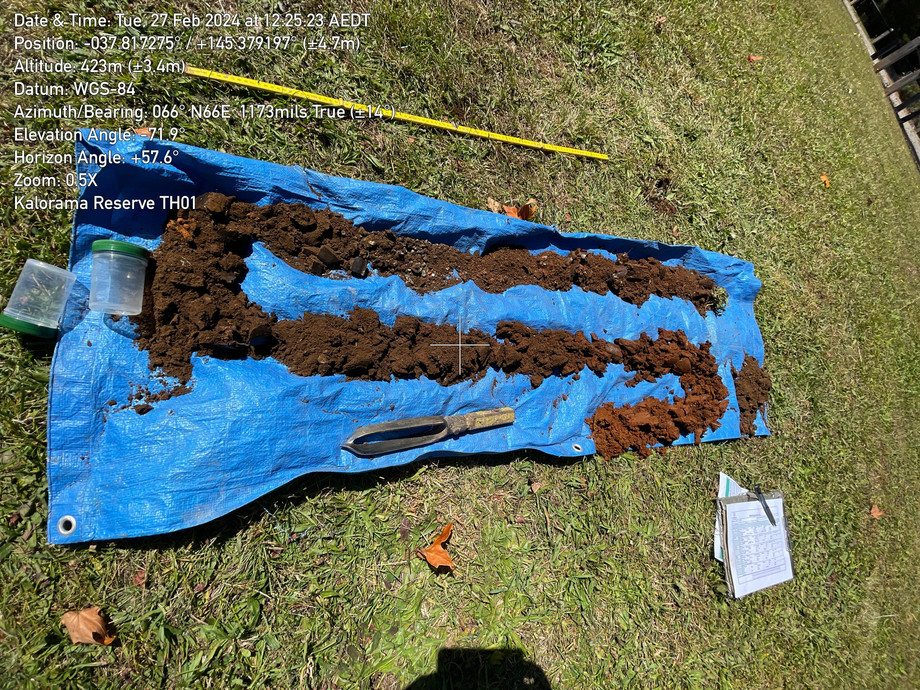
Soil profile evaluation is the technical foundation of any LCA. Understanding how soil behaves at different depths — its texture, structure, permeability, drainage characteristics, and any restrictive layers that affect how water moves through it — requires trained observation and interpretation rather than visual inspection alone. The difference between a soil profile that supports effective wastewater dispersal and one that doesn't is often invisible to the untrained eye but immediately apparent to an experienced assessor who knows what to look for and how to interpret what they find.
Site factors beyond the soil profile also influence the assessment outcome significantly. Topographic gradient affects where wastewater systems can be located and how effectively they function. Proximity to waterways, drainage lines, and property boundaries creates setback requirements that reduce the usable area for system installation. Vegetation and existing site features may indicate underlying soil conditions that affect capability.
Regulatory requirements around land capability assessments vary between Victorian and New South Wales frameworks — and within each jurisdiction, between different council areas that may have additional local requirements layered over the state-level framework. Professional LCA services provided by assessors with current, jurisdiction-specific knowledge navigate these requirements accurately rather than applying generic assumptions that may not reflect the actual regulatory environment the assessment is being prepared for.
Septic Land Capability Assessment brings this combination of technical expertise and regulatory knowledge to every assessment — providing reports that are technically robust, clearly communicated, and formatted to meet the specific requirements of the relevant planning and health authorities.
A professional land capability assessment follows a structured methodology that ensures the evaluation is thorough, reproducible, and defensible in the planning process.
Site inspection is the foundation — a physical visit to the property during which the assessor evaluates the topography, identifies relevant site features, and conducts the soil investigation that provides the technical basis for the assessment. Soil investigation involves hand augering or machine excavation to examine the soil profile at defined depths and locations across the proposed development area and any proposed effluent dispersal area.
Soil profile description follows a standardised methodology — characterising the texture, structure, colour, drainage indicators, and any restrictive features at each horizon observed in the investigation. These descriptions, combined with simple field tests of soil permeability and other properties, provide the data that drives the capability evaluation.
The written report translates the site investigation findings into a capability conclusion — typically expressed as a capability class that indicates what the site can support and under what conditions — and provides the design parameters that guide the appropriate wastewater system design for the site.